
POS for milk tea and coffee shops
A drink is not one product. It is a cup, a lid, tea, milk, syrup and whatever the customer added. Here is how Tindro keeps track of all of it without slowing the counter down.
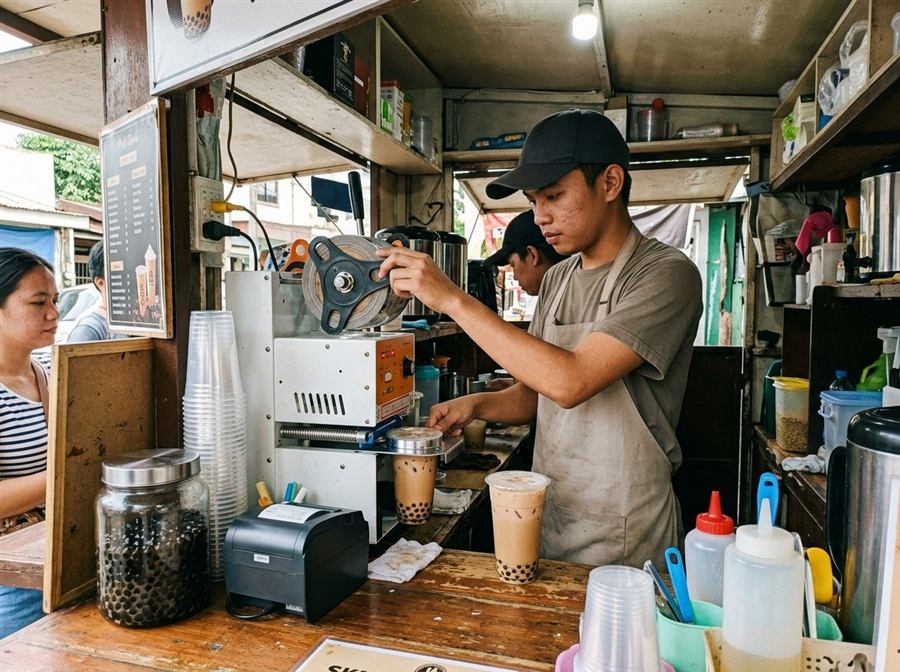
At the counter
- Sizes. One drink with regular and large, each at its own price. The cashier taps the drink, then the size.
- Add-ons. Pearls, nata, cream cheese or an extra shot, each with its own price, added to the drink they belong to.
- Notes per drink. Less ice, 50% sugar. The note stays on the line and prints on the receipt.
- Hold an order. A customer steps away to pay by GCash; hold the order, serve the next one, and resume it.
Behind the counter
- Recipes. Set what goes into each drink: one cup, one lid, the tea and the pearls. Selling it deducts those ingredients from stock.
- Real cost per cup. A drink with no cost entered is costed from its ingredients, so the profit on every sale is the real one.
- Ingredient stock. Cups, lids, powder and syrups count as stock, with low-stock warnings before you run out mid-rush.
- Supplies at cost. Ingredients and supplies are valued at what you paid, so the stock report does not count them as free.
Online orders and regulars
The online ordering module gives you a page where customers order ahead for pickup, and the loyalty module gives regulars points to spend on their next cup.
Questions
Does it work on a tablet at the counter?
Yes. The selling screen is built for tablets and phones as well as a PC.
Can it handle a rush?
Search by the first letters of a drink, or tap it on the grid. A double tap cannot charge a customer twice.
How do I work out what one cup costs?
Our guide walks through it with real numbers: see milk tea shop costing.